
Most people buying a retractable awning spend the majority of their decision-making energy on size, color, and motor type. The fabric is almost an afterthought. That is a mistake, and it is usually the reason people end up replacing an awning years earlier than they should have.
The fabric is the part of your retractable awning that takes the full force of the sun, rain, wind, and everything else the outdoors throws at it. It is also the most visible part of the installation. Getting it right the first time saves you money, frustration, and the headache of a premature replacement.
This guide covers what actually matters when evaluating retractable awning fabric, without the filler.
Why Fabric Choice Matters More Than Most People Realize
A retractable awning frame, if it is powder-coated aluminum, can last decades with minimal maintenance. The fabric is a different story. Depending on what it is made of, how it was woven, and how well it handles UV exposure, moisture, and salt air, a fabric can last anywhere from three years to well over fifteen. That is a massive range, and the difference almost always comes down to material quality and how well it suits your specific environment.
In coastal areas like Charleston, Mount Pleasant, and the surrounding Lowcountry, fabric selection carries even more weight. Salt air accelerates degradation in lower-quality materials. Humidity keeps fabrics damp longer than they would be in drier climates. And the South Carolina sun is relentless from April through October. A fabric that performs fine in Chicago or Denver can fail fast here.
The Main Fabric Types Used in Retractable Awnings
Before evaluating specific properties, it helps to understand the three materials you will encounter most often when shopping for a retractable awning.
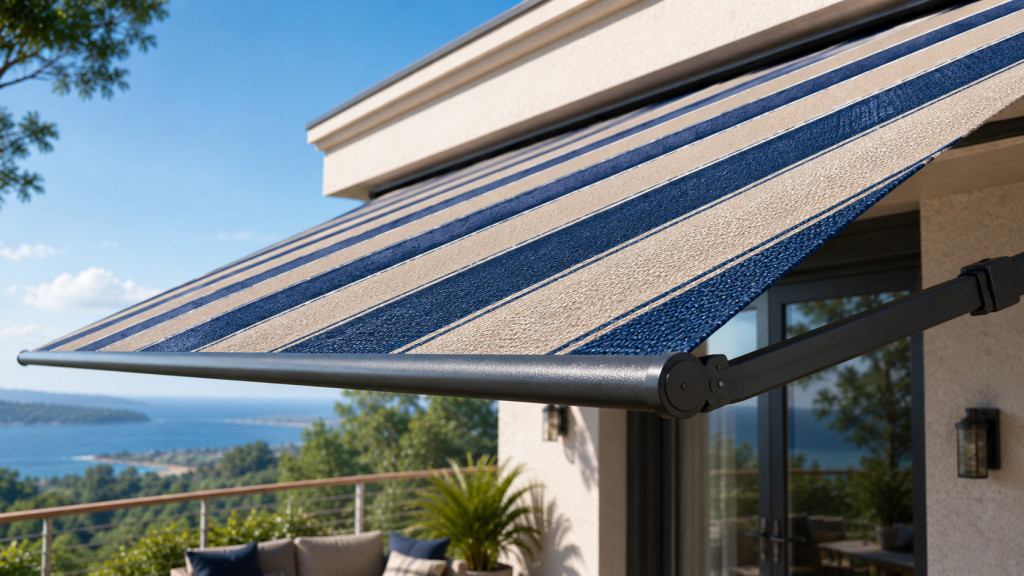
Acrylic is the gold standard for outdoor awning fabric. Solution-dyed acrylic, where the color is baked into the fiber before weaving rather than applied as a surface treatment, holds up exceptionally well against UV fading, moisture, and mildew. Sunbrella is the most recognized brand in this category and is widely used by quality awning installers for good reason. Acrylic fabrics breathe, meaning they dry faster after rain, which directly reduces mildew risk. The trade-off is cost. Acrylic fabric costs more upfront, but it earns that price difference over time.
Polyester is more affordable and widely available. The issue is that most polyester awning fabrics are coated or laminated to achieve weather resistance rather than being inherently resistant at the fiber level. Over time, that coating breaks down, especially under constant UV exposure. Once the coating goes, fading and moisture absorption accelerate quickly. Some higher-end polyester fabrics with PVC coating perform reasonably well, but they do not breathe as well as acrylic, which creates mildew risk in humid climates.
Vinyl and acrylic blends show up in certain product lines and can offer a middle ground. Blended fabrics vary widely in quality depending on the ratio and the manufacturing process, so they require more careful evaluation on a product-by-product basis rather than as a category.
What to Actually Evaluate Before You Commit
Once you understand the material types, these are the specific properties worth examining before making a purchase decision.
UV Resistance
This is non-negotiable for any retractable awning fabric, but especially in the Southeast. UV exposure breaks down fibers, fades color, and weakens the structural integrity of the weave over time. Look for fabrics rated to block at least 90 percent of UV rays. Solution-dyed acrylics typically test well here. Ask your dealer for specific UV block ratings, not just general claims about sun protection.
Fade Resistance
Fade resistance and UV resistance are related but not the same thing. A fabric can block UV rays adequately but still fade if the dyeing process is surface-level rather than solution-based. Solution-dyed fabrics resist fading far better because the color is throughout the fiber, not just on the outside. If you want your awning to look the same in year seven as it did in year one, this matters.
Water Repellency
Retractable awnings are not designed to be left out in heavy rain, but they will encounter moisture regularly. A good retractable awning fabric should shed light rain and dry quickly. Fabrics treated with a water-repellent finish handle this well when new, but that finish can wear down over time. Acrylic fabrics tend to maintain water repellency longer than coated polyester options. For anyone living near the coast or in an area with frequent afternoon showers, this should rank high on your evaluation list.
Mildew Resistance
Mildew is one of the most common complaints from awning owners in humid climates. It shows up as dark spotting, it is difficult to fully remove, and it shortens fabric life. Mildew resistance in awning fabric comes from two places: the material’s ability to dry quickly and any antimicrobial treatments applied during manufacturing. Acrylic fabrics generally win on both counts. If you are storing your awning retracted and the fabric is still damp from rain or morning dew, a fabric that breathes and dries fast is going to outlast one that holds moisture.
Tensile Strength and Weave Density
This one is less discussed but worth paying attention to. A tightly woven, high-tensile fabric resists tearing and fraying better under wind stress. Retractable awnings retract when wind picks up, but no one catches every storm perfectly. A fabric with good tensile strength buys you more forgiveness in those situations. When examining fabric samples, pull them gently and look for how the weave responds. Loose or uneven weaves are a warning sign.
Warranty Terms
Fabric warranties are a useful proxy for manufacturer confidence in the product. Sunbrella offers a ten-year limited warranty on their awning fabrics. That is not a coincidence. It reflects how the material is built. Short warranties, or warranties with significant carve-outs for fading and weather damage, should prompt additional questions.
Salt Air and Coastal Climates Change the Equation
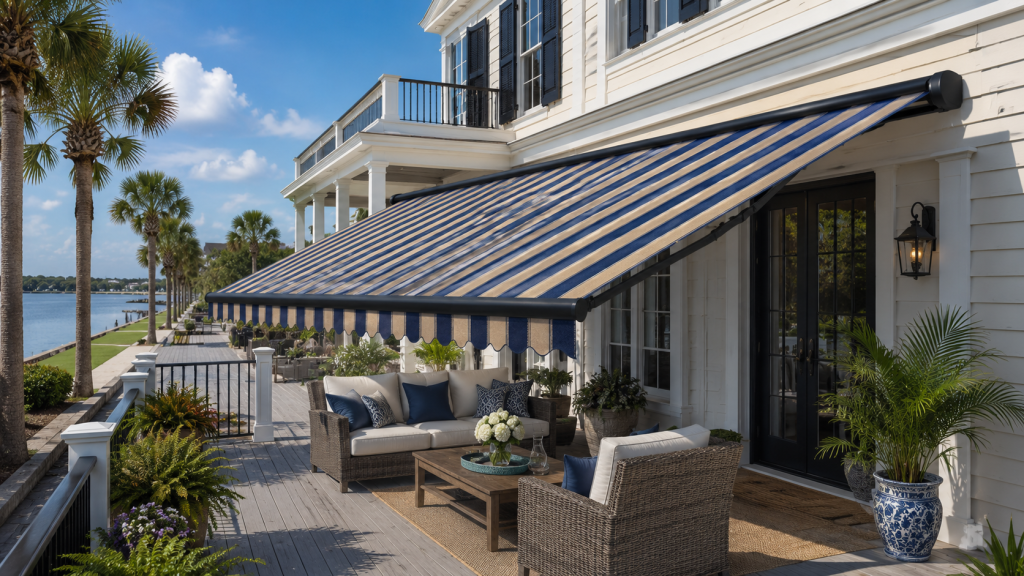
If you are in Charleston, James Island, Daniel Island, Sullivans Island, or anywhere within a few miles of the water, salt air is a factor in every outdoor material decision you make. Salt accelerates corrosion on metals and degrades lower-quality synthetic fibers faster than standard environmental exposure alone.
For retractable awning fabric specifically, salt air tends to amplify moisture retention in fabrics that do not breathe well. This makes mildew more likely and shortens the window before you start seeing visible wear. Solution-dyed acrylic fabrics handle salt air environments better than alternatives, which is part of why professional installers in coastal markets lean toward them consistently.
It is also worth noting that salt air considerations extend beyond the fabric itself. The hardware, mounting brackets, and roller tube on your retractable awning should all be rated for coastal environments. An otherwise excellent fabric installation can fail early if the surrounding components are not up to the conditions.
Color and Aesthetics Are Part of the Durability Conversation
This might seem like a style consideration, but color choice has practical implications. Darker colors absorb more heat, which can accelerate fabric wear over time and makes the underside of the awning feel hotter. Lighter colors reflect more heat and tend to show less fading over the long term. Stripes and patterns printed on top of a base fabric rather than woven in are more likely to fade unevenly.
None of this means you should avoid darker or patterned fabrics. It means you should factor in the quality of the dyeing process when choosing them. A quality dark fabric from a reputable manufacturer will outperform a cheap light fabric every time.
Questions to Ask Your Awning Installer
Before committing to any retractable awning installation, these questions will tell you quickly whether the installer knows their product and whether the fabric spec is appropriate for your situation.
What is the fabric material and who manufactures it? A confident installer will answer this without hesitation and be able to point you to product documentation.
Is this a solution-dyed fabric? If the answer is unclear or the installer does not know, that is a concern.
What is the UV block rating? Ask for the number, not a general description.
How does this fabric perform in coastal or high-humidity environments? If you are in the Lowcountry, a local installer should have direct experience answering this question.
What does the warranty cover and for how long? Read the warranty terms before signing anything.
What a Quality Retractable Awning Fabric Actually Costs
Fabric costs vary depending on material, manufacturer, width, and whether the awning is motorized or manual. The fabric component of a quality retractable awning installation typically runs higher than budget alternatives, but the price difference is almost always justified over a ten-year horizon.
Replacing a failed fabric on a retractable awning requires labor, hardware assessment, and in some cases, dealing with discontinued fabric lines that no longer match your frame color or pattern. Buying quality the first time removes that problem entirely.
The installers who cut corners on fabric to offer a lower initial quote are almost never the better value. They are transferring the long-term cost to you.
The Bottom Line
A retractable awning is a meaningful investment in your outdoor living space. The fabric determines how long that investment holds up and how good it looks through every season. Solution-dyed acrylic fabric from a reputable manufacturer, chosen with your specific climate in mind, is the right foundation for any quality installation.
Everything else, the motor, the frame, the mounting, matters too. But the fabric is what you see every day and what the environment interacts with constantly. It deserves the most careful attention in your buying decision.
If you are in the Charleston area and want an honest conversation about retractable awning options that are built for coastal conditions, explore our retractable awning services (hyperlink: /retractable-awnings) to see what we install and why, or call us at (843) 422-3625 to talk through your specific project. No pressure, no pitch, just straight answers.
